
Lists, search & filters
Find participants, implementations and operational records efficiently.
CORE / Data & Integrations
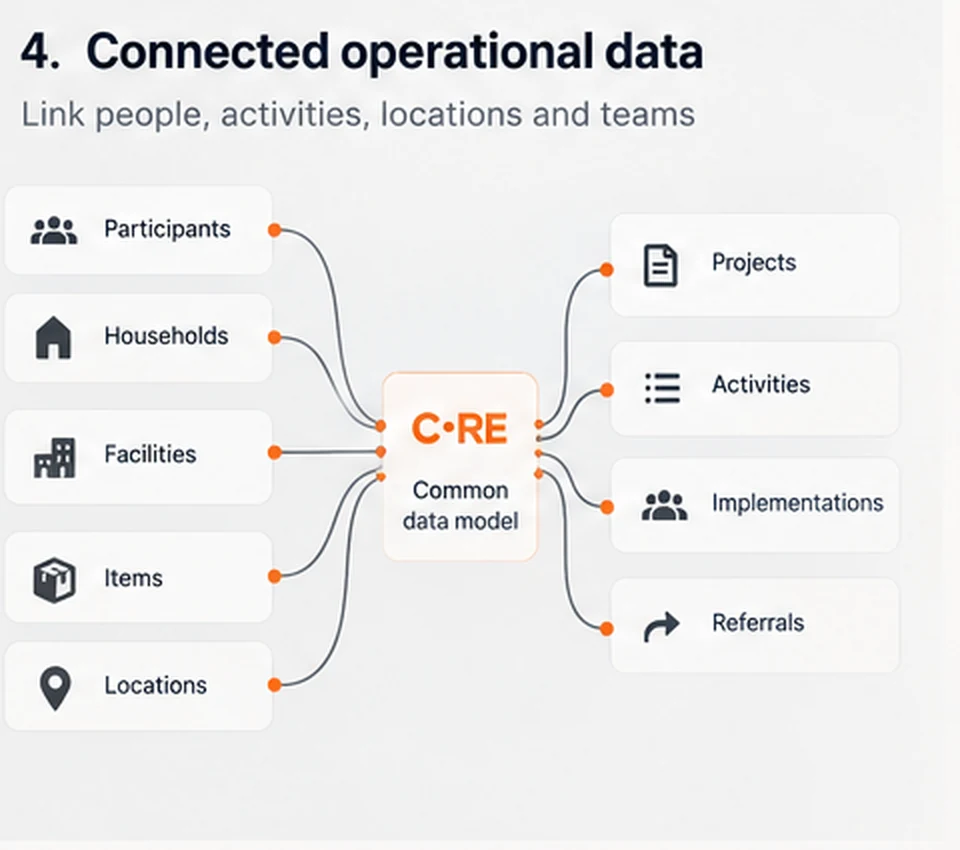
CORE is an operational data layer: teams can find, use, print and exchange programme information while keeping it structured for wider organisational systems.
From daily use to wider ecosystems
CORE is designed as an operational layer. That means the same information can support daily management, reporting exports, interoperability and future automation without having to be reconstructed later.
01 / Operational management
Frontline and programme teams can work directly with structured operational information to manage delivery and follow-up.
Find participants, implementations and operational records efficiently.
Automatically generate attendance and distribution sheets from existing records, ready for paper use or digital field collection through Kobo.
Keep supporting files connected to the relevant operational record.
Connect records to relevant external resources.
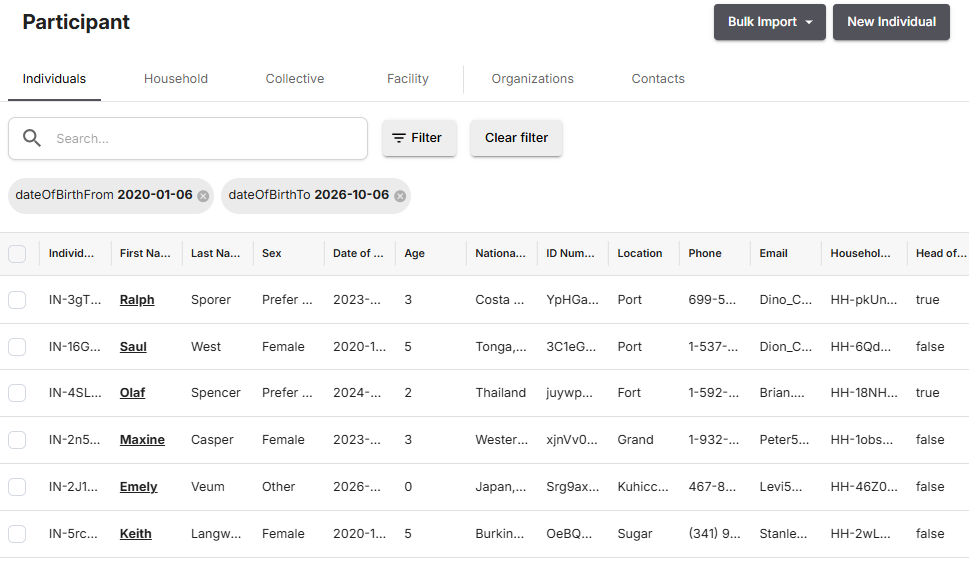
Reuse participant and implementation information to generate attendance and distribution sheets automatically. Paper or digital Kobo formats help teams prepare faster and avoid the omissions, duplicate entry and transcription errors introduced by manually assembled lists.
When programme teams create connected, contextualised data through their daily work, the same information is easier to exchange, aggregate, analyse and report without repeated manual reconstruction.
02 / Connect the wider ecosystem
It provides a structured operational layer between field data collection, programme operations and downstream systems.
XLSForm-based mobile data collection.
Participants · Projects · Activities · Activity Implementations.
Structured export and API-based data exchange.
03 / Keep identity across systems
CORE automatically assigns a unique CORE ID to records and encourages its use across files and system integrations. Existing identifiers can also be retained, supporting migration and interoperability without forcing organisations to abandon identifiers already in use.

04 / AI-ready operational data
Consistent identifiers, entities, relationships and programme context create a stronger foundation for automated processing and future AI applications. CORE keeps this structure close to the operational source instead of trying to reconstruct context downstream.
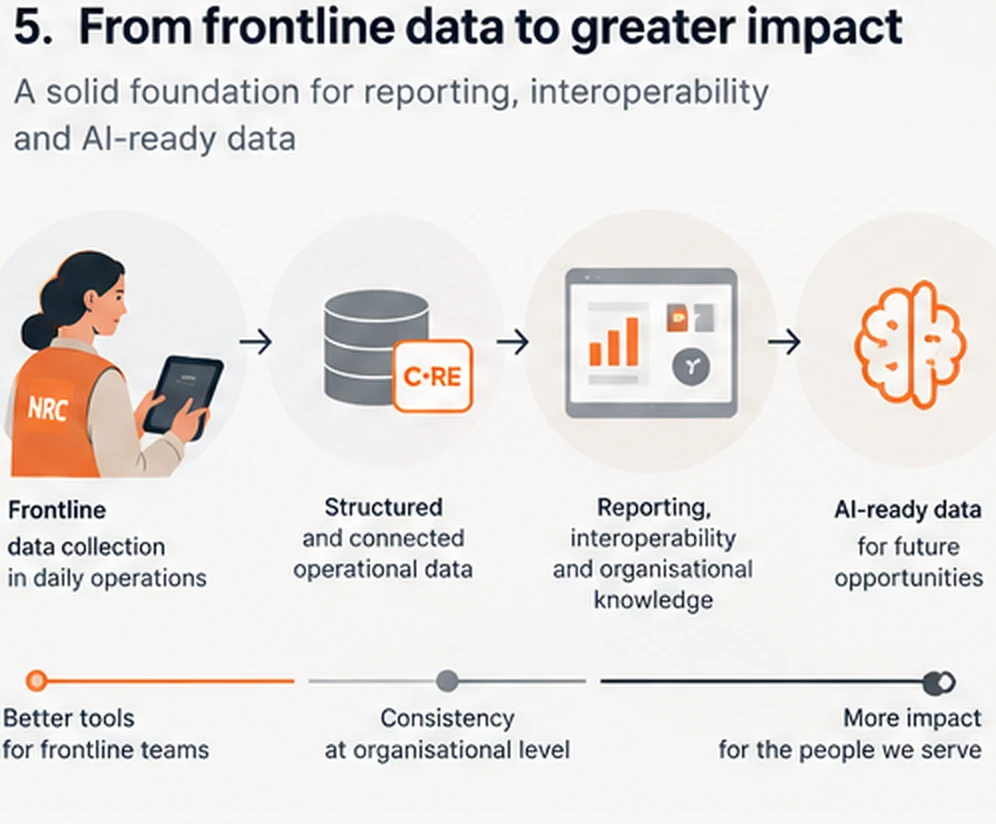
CORE helps teams use data to deliver programmes today while keeping that same data ready for aggregation, quality assurance, analysis and reporting tomorrow.
Explore Data Quality & Traceability