
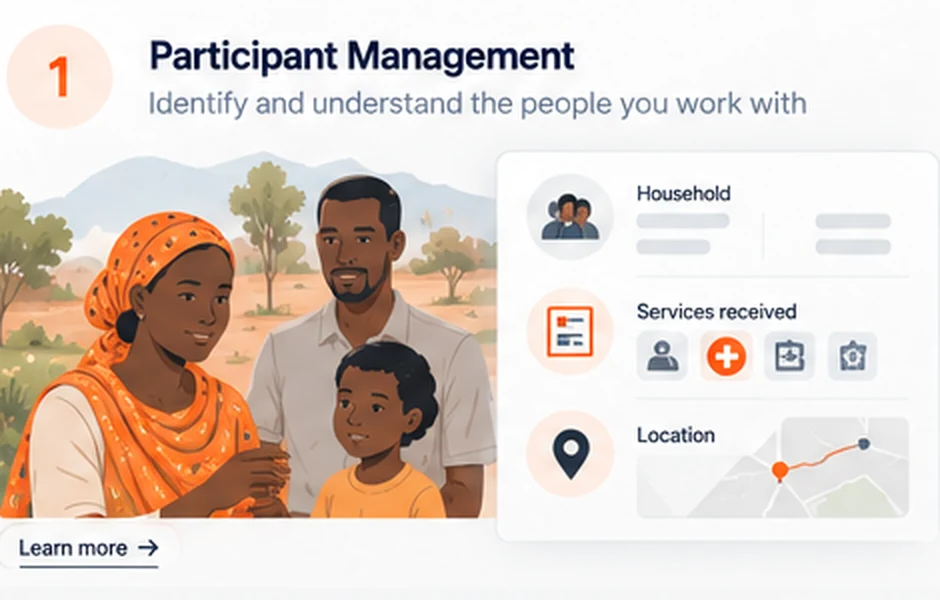
01
Participant management
Understand the people, households and entities you work with — and keep service history close at hand.
CORE / In practice
Illustrative situations show how frontline teams, programme managers and support functions use connected information to deliver assistance, collaborate and retain the evidence.
Start with everyday work
Three complementary views of the same operation: understand who is supported, document delivery, and follow the wider programme.
Understand the people, households and entities you work with — and keep service history close at hand.
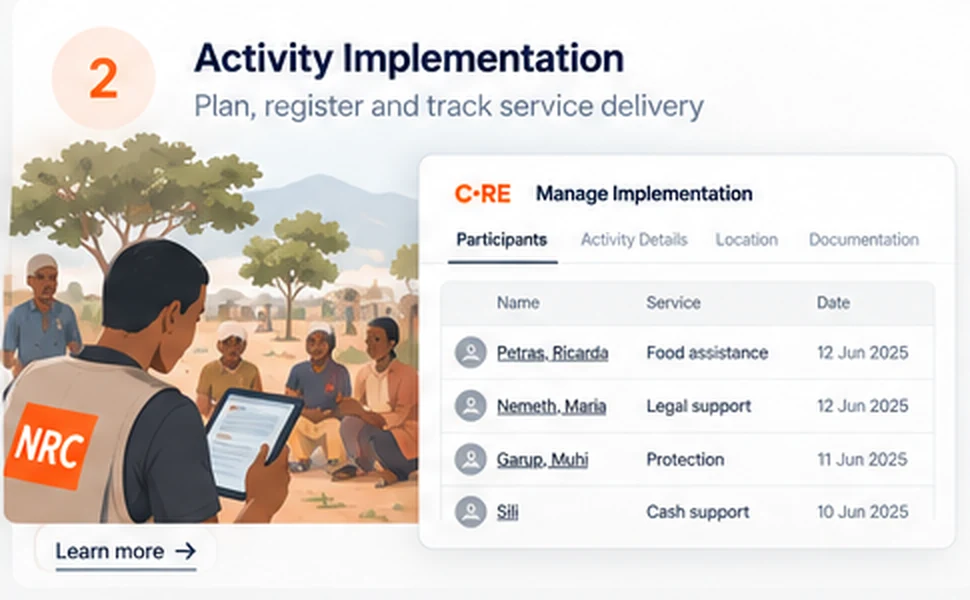
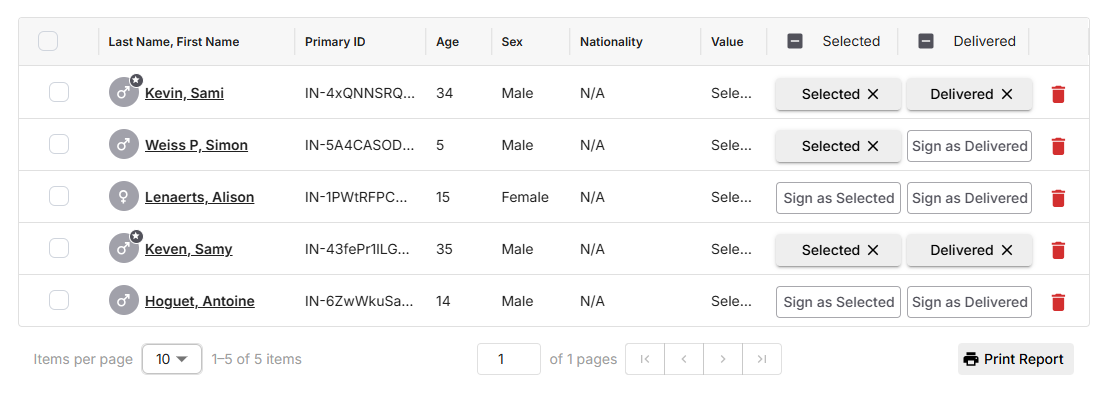
Select participants, deliver the service and document what actually happened — not just what was planned.
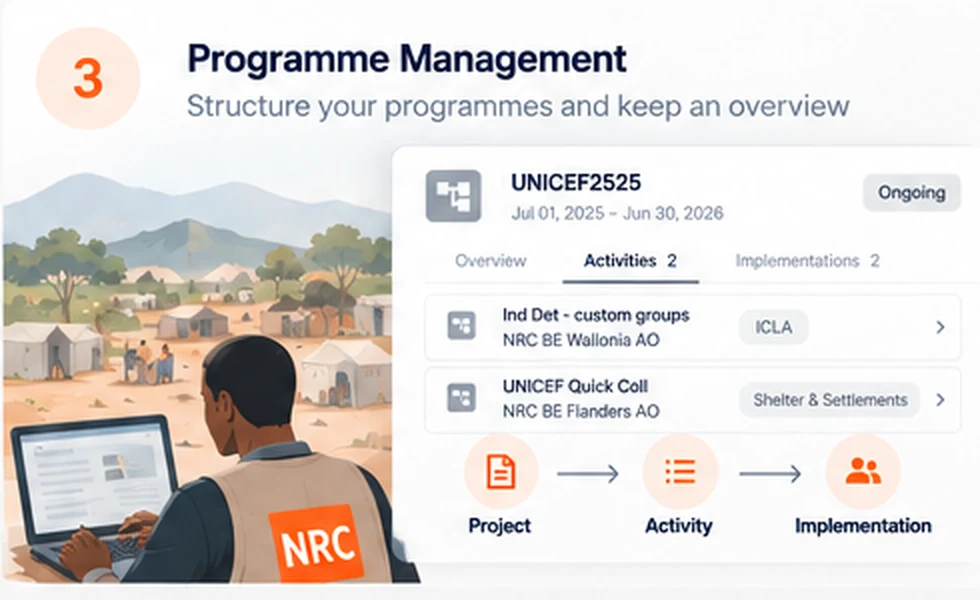
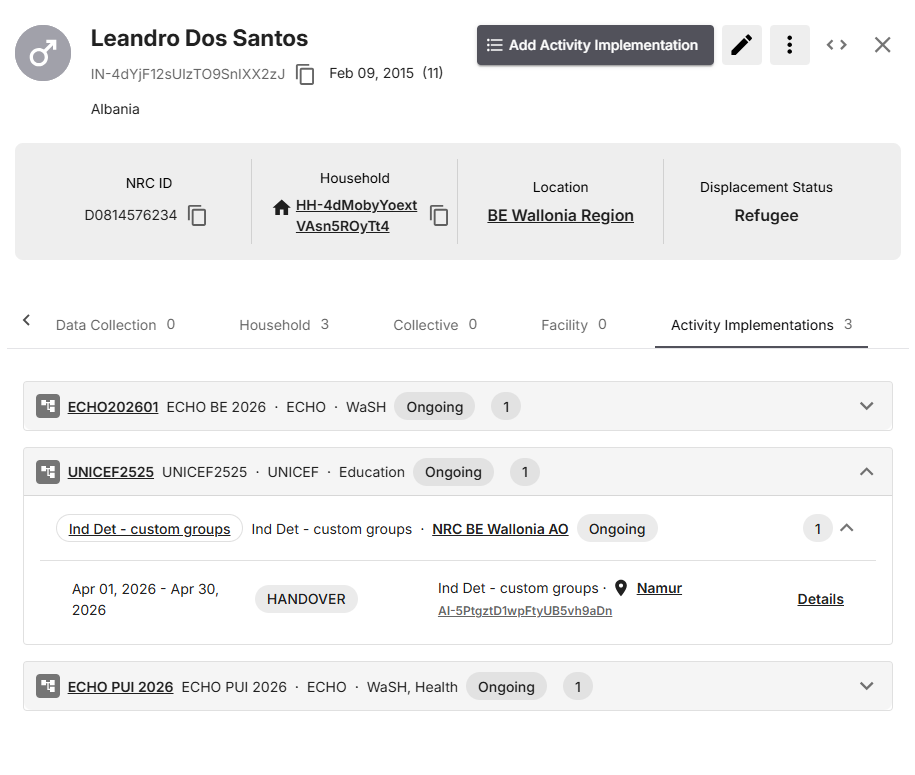
Follow programme progress, review implementation histories, analyse across activities and automate reporting from connected operational data.
01 / Frontline registration & follow-up
The situation
A registration officer or field colleague meets someone who may already have received assistance through another activity.
With CORE
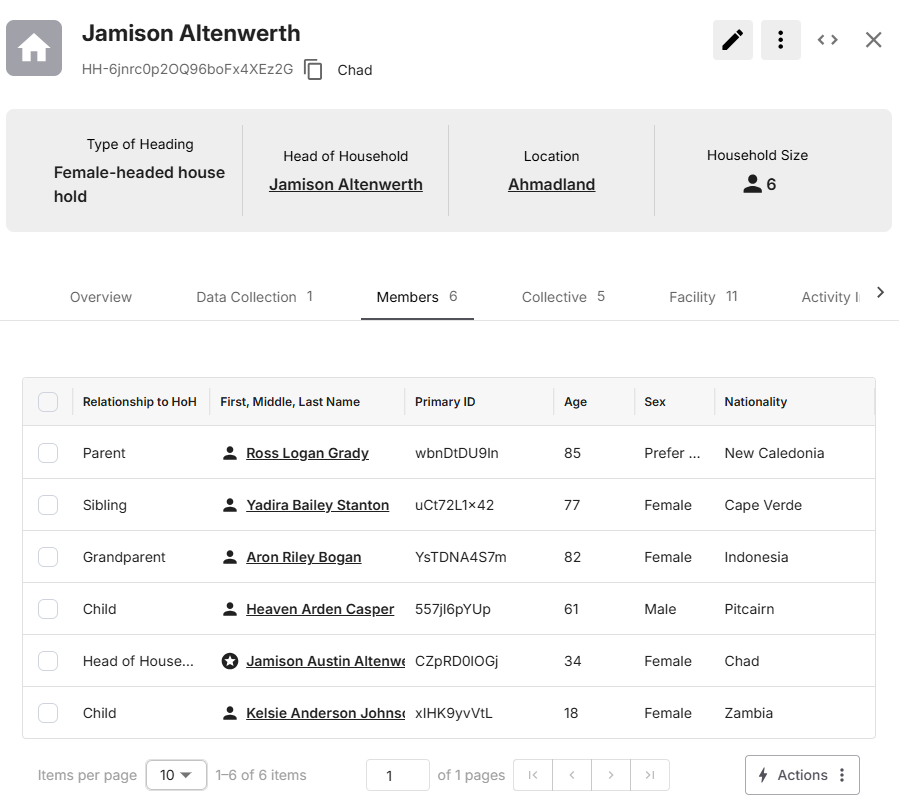
Search for an existing Individual or Household, check relationships and authorised service history, and update the shared record instead of starting another list. Standard fields, input checks and duplicate detection help keep information consistent.
The practical benefit
Less repeated registration, fewer duplicate records and better-informed follow-up.
02 / Activity delivery teams
The situation
A team is preparing a training session or distribution and needs a reliable participant list and a clear record of delivery.
With CORE
Use an Activity Implementation to select participants and track individual Selected and Delivered states. Generate attendance or distribution sheets from existing records, on paper or digitally through Kobo, and document the items provided.
The practical benefit
Less manual copying, fewer transcription errors and a clearer record of who actually received support.
03 / Programme managers & IM / MEAL
The situation
A manager needs to understand delivery across activities and locations; an IM or MEAL colleague needs consistent figures for a reporting cycle.
With CORE
Review implementation histories, compare progress and analyse connected data across programmes. Reuse structured records and configured counting rules for automated reporting rather than rebuilding figures from separate spreadsheets.
The practical benefit
Faster oversight, more consistent reporting and less time spent reconciling the same information.
04 / Colleagues, managers & cross-programme teams
The situation
A colleague changes responsibilities, a manager reallocates work, or a participant needs support from another programme team.
With CORE
Assign or reassign a case or Activity Implementation between team members and managers. Authorised colleagues work from the same centralised records, retaining the history and references needed to continue. Referrals can connect requests to the relevant programme response.
The practical benefit
Clearer responsibility, less information lost in handovers and smoother cross-programming.
05 / Local NGO partners & programme coordination
The situation
A programme works with local NGOs and needs a shared information structure without creating parallel reporting files for every partner.
With CORE
Localisation means strengthening the role and leadership of local organisations in humanitarian action. A shared CORE setup can support that collaboration through common records, assigned responsibilities and agreed access rights. Partners define who maintains, shares and uses each part of the information.
The practical benefit
More continuity between organisations and less duplicate entry, while keeping information sharing within agreed responsibilities.

06 / Programme, Finance, Supply & audit colleagues
The situation
An audit asks what was delivered, to whom and when, after staff have changed and the original operation has ended.
With CORE
CORE logs actions with timestamps and keeps participants, Activity Implementations and distributed items referenced in the data model. Authorised colleagues can follow those links and supporting records to reconstruct the operational history, subject to applicable retention rules.
The practical benefit
Less manual reconstruction and stronger evidence for audit, Finance and Supply reviews.

Making the message tangible
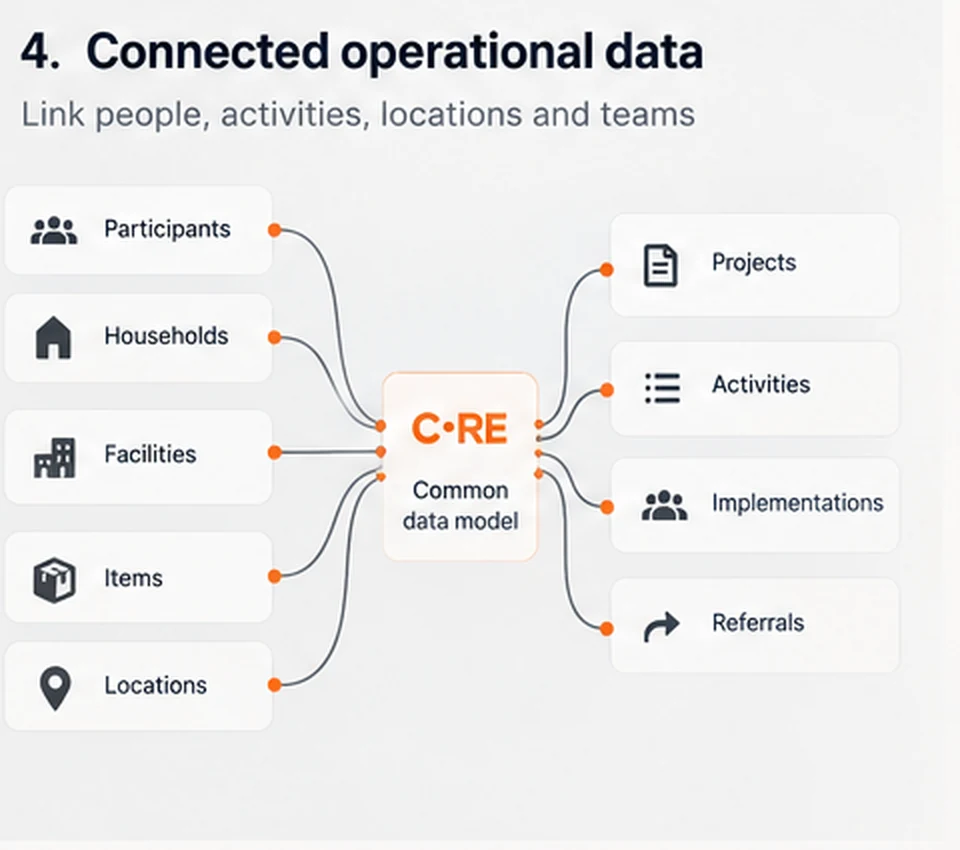
CORE links participants, locations, activities, implementations and referrals in a shared structure. That helps frontline teams today — and creates cleaner foundations for reporting, interoperability and AI readiness tomorrow.
Shared records, guided data entry and automation reduce manual steps and avoidable errors. Time saved and less rework help teams deliver services more efficiently and reduce administrative costs.
Explore the demo videos →