
Inherit configuration
Carry forward relevant Activity metadata into implementation.
CORE / Programme
Connect contractual commitments to operational configuration and the repeated Activity Implementations through which programmes are actually delivered.
CORE helps reporting, but this page is about something else first: making day-to-day programme work easier for field and programme teams. When the operational structure is clear, teams save time, avoid mistakes and are less likely to forget someone — while reporting and MEAL also benefit downstream.
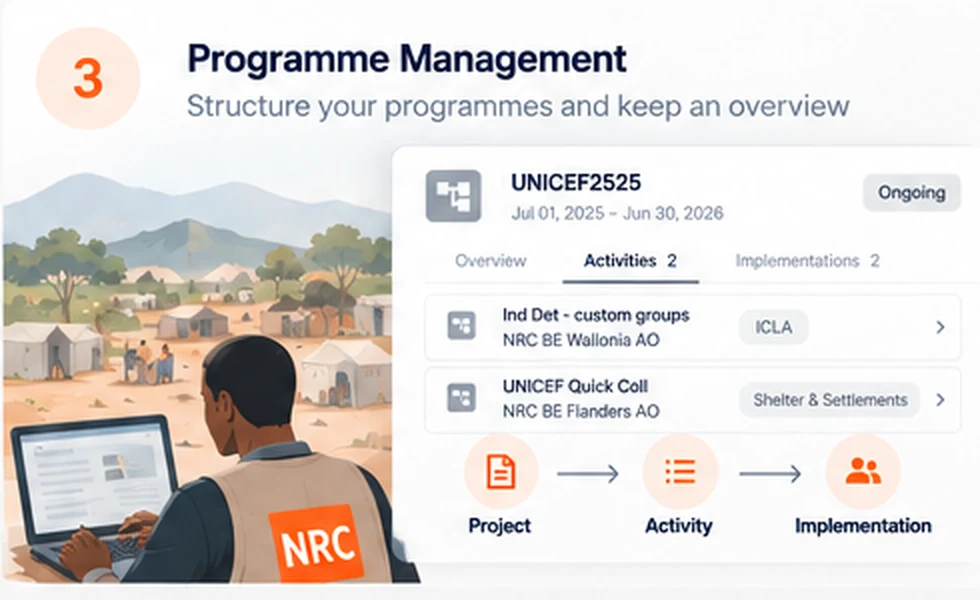
01 / The programme structure
CORE separates the contractual framework, operational configuration and actual delivery while keeping them connected.
Donor, codes, sectors, overall budget, contractual information and period.
Outputs, targets, operational perimeter, Area Office, Team and target population.
An instance of the configured Activity.
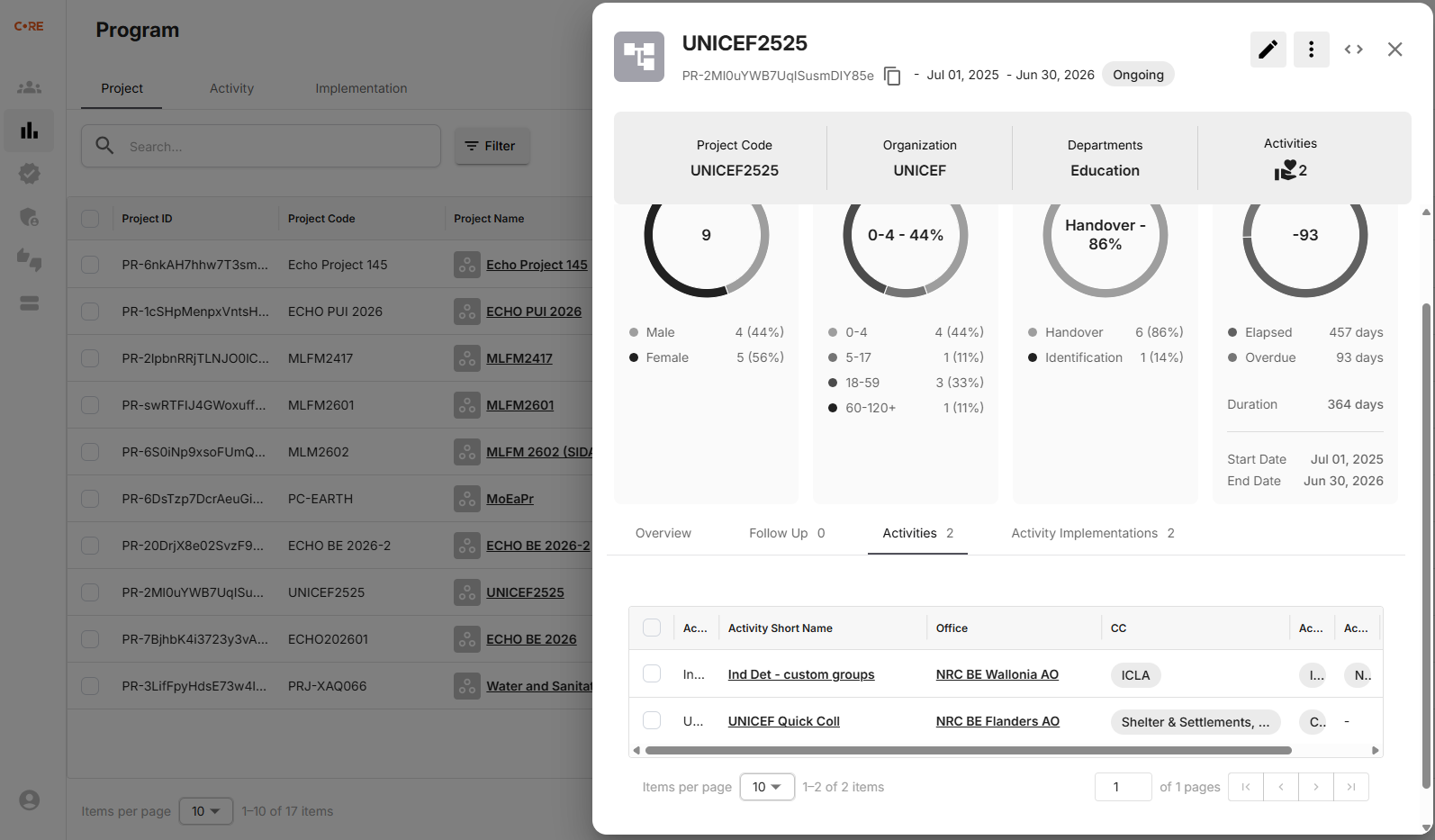
Built for programme teams
CORE is designed first to make frontline work easier: reuse information, save time, reduce errors, improve follow-up and avoid leaving people behind. Because that daily work creates structured data at source, monitoring and reporting are also easier and more reliable by design.
It brings together WHO — Participant · WHAT — Activity · WHERE — Location · BY WHOM — Team, while documenting the context and delivery specific to that implementation.
02 / Configure once
When an Activity Implementation is created, relevant Activity-level metadata can be inherited. Existing participants, locations and teams are referenced rather than re-entered.
Carry forward relevant Activity metadata into implementation.
Record information specific to this implementation.
Attach a dedicated Form when more structured information is needed.
Record items distributed where relevant.
Implement an Activity repeatedly as programme delivery progresses.
Relate implementation and participant progression to quantitative output targets.
Managers and team members can assign or reassign cases and Activity Implementations to colleagues. Centralised records keep the participant history, programme references and follow-up available to authorised users across handovers and programmes.
03 / Follow progression
Activity Implementation can distinguish participants as programme delivery progresses — for example from Identification to Design/Selection, Implementation and Handover. The population initially identified may differ from those selected and from those actually reached.
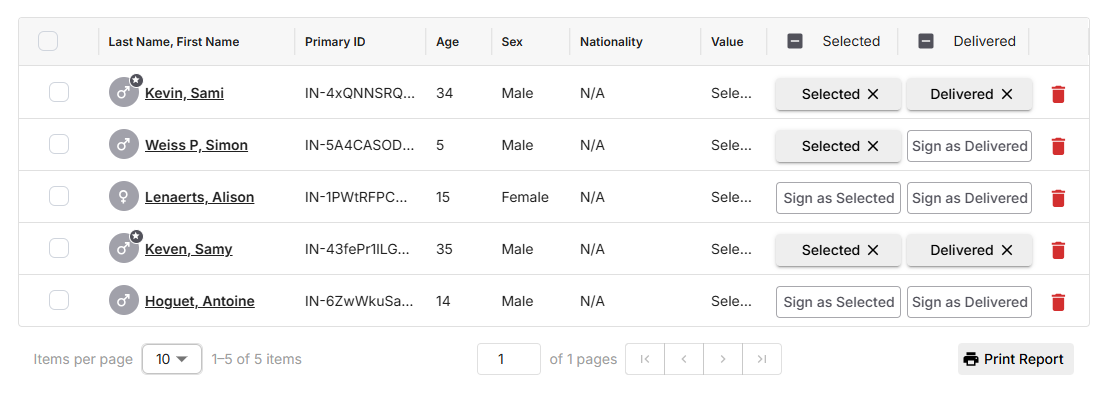
This progression also supports more meaningful participant counting: identified, selected and actually reached populations do not have to be treated as the same number.
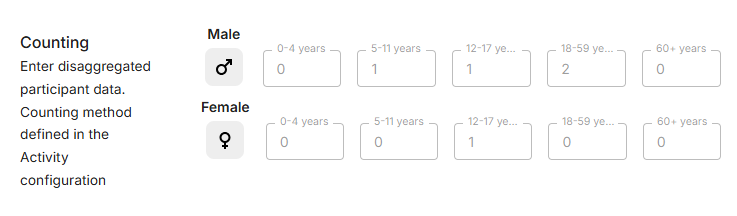
Project → Activity → Activity Implementation. Programme teams get an operational tool for daily delivery; the structured data they create can then flow into monitoring, aggregation and reporting without rebuilding the same information downstream.
Explore Forms & AssessmentsSee CORE in action